A Late-Autumn Garden Visit for Shape and Structure
A late-autumn garden visit reveals which stems, seed heads, and lasting forms hold a border together after flowers fade, without turning looking into chores.
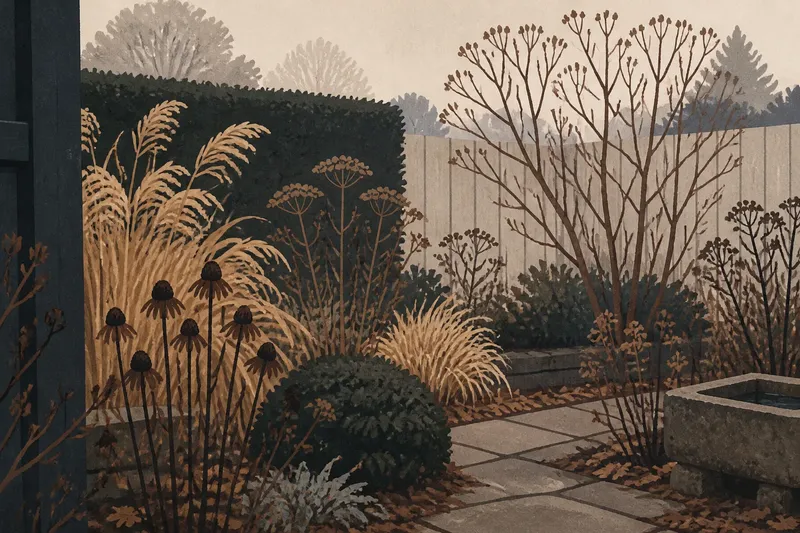
On a gray afternoon, a dried coneflower head can catch the light more clearly than the empty space around it. A late-autumn garden visit is a chance to notice such shapes before leaves, frost, or snow change the view again. Bring no pruning shears. The point is to see what remains, not to turn the garden into a queue of tasks.
1. Begin at the entrance
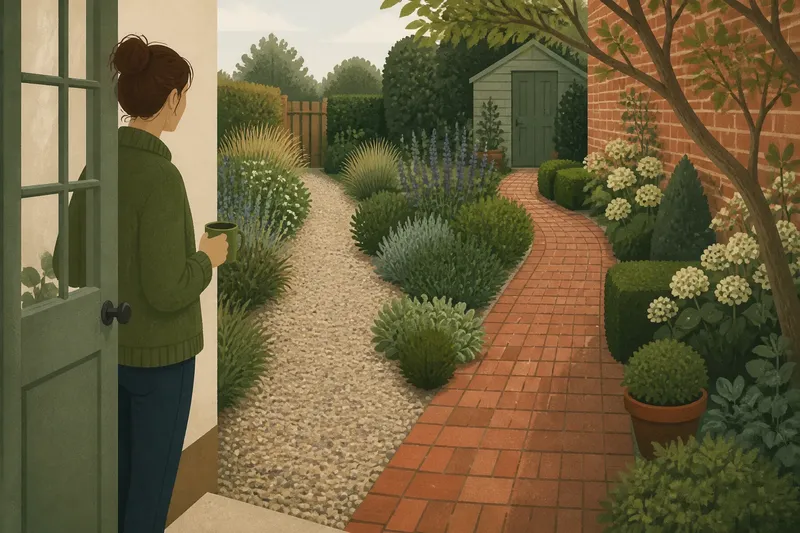
Pause where the garden first opens into view. Late-season structure is easiest to read from a little distance, before individual plants start making their case. Notice the broad arrangement: a low edge, a cluster of upright stems, perhaps a shrub or evergreen holding the far side of a bed.
Ask what draws the eye first. It might be a pale stand of ornamental grass, a dark yew, or a line of seed heads against a fence. Then notice what the eye passes over. A plant can be handsome close up and still disappear from the main view; that is not necessarily a flaw, but it does tell you what role it is playing.
Take a few steps to either side and look again. A group of stems that reads as a single mass from the path may resolve into several separate plants from a window or gate. Those different views help explain why a bed feels composed in one place and scattered in another.
2. Follow the stems
When flowers have gone, stems provide much of a border’s visible line. Look for straight, arching, branching, and leaning forms. A tall, bare stem can make a clean vertical mark; a bent one can soften the hard edge of a wall. Neither shape needs to be judged by whether it looks tidy.
Compare stems against their backgrounds. Pale stems stand out against dark hedges, while brown ones may disappear against a wooden fence. If a plant blends into its setting, look at it from another angle before deciding it has vanished from the design. A change in sky or light may reveal its outline.
Notice where stems begin and where they end. A dense clump may provide a solid base, while the upper branches scatter into finer lines. That shift gives the eye a path to follow. If every plant ends at roughly the same height, the border can look abruptly cut off even when nothing has been cut.
3. Read the seed heads
Seed heads offer a range of forms after their color has faded: rounded, flat, spiky, or branching. The dried heads of coneflowers, for example, make small dark discs above sturdy stems. A flat umbel or a loose spray creates a different outline, even if both are now brown.
Look at the heads as groups as well as individuals. Several similar shapes can make a quiet patch feel deliberate, while one isolated head may look like a stray detail. Distance matters here. From a path, a cluster may read as a single textured area; from a nearby window, its separate forms become more apparent.
Notice also which heads remain upright and which droop. A downward bend can create a softer line, while an upright head may punctuate the bed. There is no need to rank them. The useful question is whether their differing postures add variety or leave an awkward gap in the view.
4. Look for lasting forms
Not every useful winter form is a stem. An evergreen mound, the branching framework of a shrub, a clipped hedge, or the edge of a stone trough can hold the scene when herbaceous plants have receded. See which forms remain legible without their summer foliage or flowers.
Look for relationships between plant and object. A low mound beside a bench can make the seat feel settled into the garden. A bare shrub against a plain wall may read almost like a drawing. If a structure or container dominates the view, note whether nearby plants soften its outline or compete with it.
Imagine you have a narrow border beside a pale fence, with dried grasses at one end and a bare shrub at the other. If the middle appears empty from the kitchen window, the first useful observation is where the visual connection breaks. A low evergreen or a group of remaining stems might bridge that gap in a future planting plan; the visit itself need not become an immediate shopping trip.
5. Compare the views
Move between the places from which the garden is usually seen: a doorway, a kitchen window, the path, or a seat. Each view gives the same plants a different job. A seed head that is subtle at close range may mark the center of the bed from indoors, while a handsome grass may block the view beyond it.
Notice how the foreground meets the background. A dark hedge can make pale stems visible; a busy fence can make them hard to distinguish. Look for a useful contrast in tone, texture, or direction rather than relying on flower color, which has mostly left the scene.
If you use a phone, take a photograph from the same spot you might revisit later. It can help separate what you remember from what is actually in the frame. A quick written note works just as well: “upright stems visible from the door; bare patch beside the downspout.” The note is for clarity, not an invoice for spring.
6. Notice the weather’s mark
Late autumn changes the garden’s outlines from day to day. Rain darkens stems and makes seed heads heavier; wind shifts grasses into new arcs; frost can sharpen a fine edge. Look at what weather has altered, without treating every lean or fallen leaf as a defect.
Pay attention to where water has left plants pressed together or soil exposed. That may change the view temporarily, or it may reveal a place where the planting looks open even before winter arrives. A single visit cannot settle which interpretation is right, so record what caught your eye and let another seasonal view add context.
Sound can help direct attention too. Dry grass moving in a breeze gives a sense of scale and motion that a still photograph misses. A garden’s structure is not only a set of outlines; some forms are most noticeable because they shift against the still ones.
7. Keep a small record
Choose one or two observations to keep, rather than writing a complete inventory. Describe what you saw and where: “seed heads visible above the stone edging” is more useful than “needs more interest.” A precise note leaves room for a decision later.
It can help to separate observation from interpretation. Write “the left side looks lower from the gate,” then, if useful, add “perhaps a taller winter form would balance it.” The first describes the view; the second is an idea that can be considered alongside the garden’s other seasons.
What is not worth the effort is naming every stem or trying to make one afternoon answer every design question. A late-autumn visit has a narrower purpose: seeing which forms carry the garden’s outline after flowers fade. Leave the labels, diagrams, and urgent plans for another day.
Questions for the visit?
What should I look for after flowers fade?
Start with stem direction, seed-head shape, and the larger forms that remain, such as shrubs, hedges, or evergreen plants. Then view them from the garden’s usual entrances and windows, since distance changes what reads clearly.
Should I leave seed heads standing?
That depends on the plant, the garden’s needs, and any care or wildlife considerations you follow. For this visit, simply note which heads contribute a visible shape; a later decision about cutting can be made separately.
How can I judge winter structure from one visit?
Treat the visit as a record of one condition, not a verdict on the whole season. A photograph or brief note can be compared with later views as weather and light change.
When is a useful time to walk the garden?
Choose a moment when you can see the main views without rushing, preferably with enough daylight to distinguish stems from their backgrounds. An overcast day can make outlines easy to compare, while low sun may reveal textures and cast longer shadows.
Leave with one observation
Before heading inside, return to the entrance and look once more at the whole garden. Choose the form you are most likely to remember: a dark shrub against a pale sky, the slant of a grass clump, or a row of seed heads above an edge. That single observation is a useful record of the garden’s late-autumn shape and structure, and enough reason to come back when the view changes.