The More Plant Varieties, the Better?
More plant varieties can make a garden harder to read. Compare restrained, repeated and mixed planting to choose a palette that fits your space.
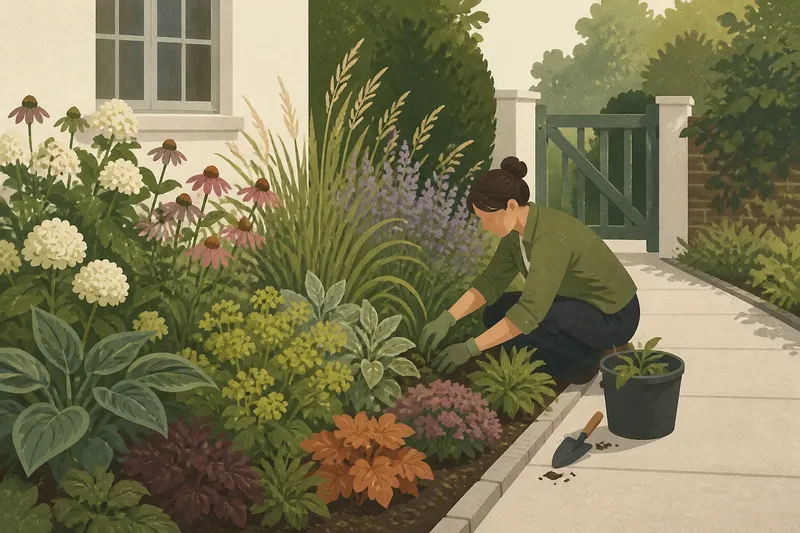
At the garden gate, a border can look busy before you have taken off your coat. The question of how many plant varieties to use is less about counting labels than deciding how much botanical detail the space can carry. A short plant list gives each choice room to register; a longer one offers more kinds of foliage, flowers, and seasonal change.
Variety and attention
Every added plant brings its own shape, color, height, flowering period, and growing habit. Those differences can make a border rewarding to inspect up close, but they also give the gardener more needs and habits to keep track of. If the plants compete for similar space or require different care, variety can become a practical burden as well as a visual one.
A restrained palette can still change through the season. Foliage emerges, flowers open and fade, and seed heads or dormant stems alter the border’s appearance. A few well-chosen plants may provide more than one kind of interest without adding another name to the planting plan.
A mixed palette has its own appeal. It can suit someone who enjoys noticing individual plants and making small adjustments as the bed develops. The useful question is whether each addition brings a distinct role, such as a different foliage texture, flowering period, or tolerance for the site.
Three palette choices
A restrained palette
Choose a small group of plants whose forms and seasonal changes suit the bed. This works well in a compact space or where a simple planting is easier to maintain. The trade-off is that gaps, damaged leaves, or a plant that struggles may be more conspicuous.
A moderate selection
Use several kinds of plants, with each filling a particular role. For instance, one may provide low foliage, another seasonal flowers, and another height at the back of the bed. This middle course allows variation without requiring every plant to be a separate feature.
A broad collection
Choose a wider assortment when you enjoy learning individual plants and have space to accommodate their mature forms. Check that their light, soil, and moisture preferences are compatible with the bed. A broad collection can feel lively, but plants that need sharply different conditions may be difficult to manage together.
Choosing plant varieties?
How many plant varieties should a border have?
There is no useful fixed count for every garden. Consider the bed’s scale, the plants’ mature spread, and how much time you want to spend tending and editing the planting.
Does a short plant list limit seasonal interest?
Not necessarily. Plants with different flowering periods or foliage changes can keep a modest palette engaging, provided their growing needs suit the site.
When is a broad plant palette a good choice?
It can suit a gardener who enjoys observing individual plants and has room to meet their different needs. Check mature size and growing conditions before combining them.
How can I tell if I have too many varieties?
Look for repeated problems: plants crowding one another, care requirements that are hard to keep straight, or additions that have no distinct role. If these appear, simplify the planting or move a plant to a more suitable spot.
Match plants to place
Before choosing varieties, note the conditions in the bed: how much sun it receives, whether the soil stays damp or dries quickly, and how much room plants have as they mature. Plant labels and local nursery advice can help you compare those needs. A plant that suits the site is usually a more useful addition than one chosen only because it is unusual.
Also consider the work the planting will create. A broad collection may call for more individual decisions about watering, pruning, or dividing. A shorter list can simplify those choices, though it does not remove ordinary care. It is not worth the effort to chase an ideal number or make every plant behave alike; gardens are not filing cabinets.
Imagine a gardener with a small front-walk bed containing plants bought one at a time, some of which need dry soil and others that prefer consistently damp ground. They check the bed’s conditions, identify which plants suit them, and move the mismatched choices to places with more appropriate growing conditions. The expected result is a planting with fewer competing care needs, while the gardener can decide whether any remaining gaps call for a new plant.
Check before adding
- Observe whether the new plant’s light needs match the bed; if they do, consider it, but if they do not, choose a plant suited to that light.
- Observe whether the soil’s moisture pattern fits the plant; if it does, keep it on the list, but if not, look for a better site match.
- Check whether the plant’s mature spread fits the available space; if it does, leave room for it, but if not, select a smaller-growing option or another location.
- Observe whether the plant adds a distinct flowering period; if it fills a seasonal gap, consider it, but if existing plants already cover that period, seek a different role.
- Check whether its foliage or form adds something absent from the current palette; if it does, weigh that contribution, but if it repeats an existing role without a clear reason, leave it out.
- Consider whether you can meet its care needs; if they fit the time and attention you want to give the bed, proceed, but if not, choose a less demanding plant for the site.
The question of how many plant varieties to use becomes clearer when each candidate has a reason to be there. Keep a short list of the plants already in the bed and note their roles, growing needs, and any seasonal gap they fill. Add a variety when it suits the site and contributes something useful; otherwise, leave the nursery label where it is.